Console Guides
Wallets
Register non-custodial addresses for monitoring, manage wallet-scoped webhooks, browse supported chains, and estimate or broadcast a transaction, all without Mudbase ever holding a private key.
Find it
Wallets is in the sidebar under the Engage group (marked NEW). Everything here is public-address monitoring and already-signed transaction relaying; Mudbase never signs anything on your behalf.
Monitored addresses
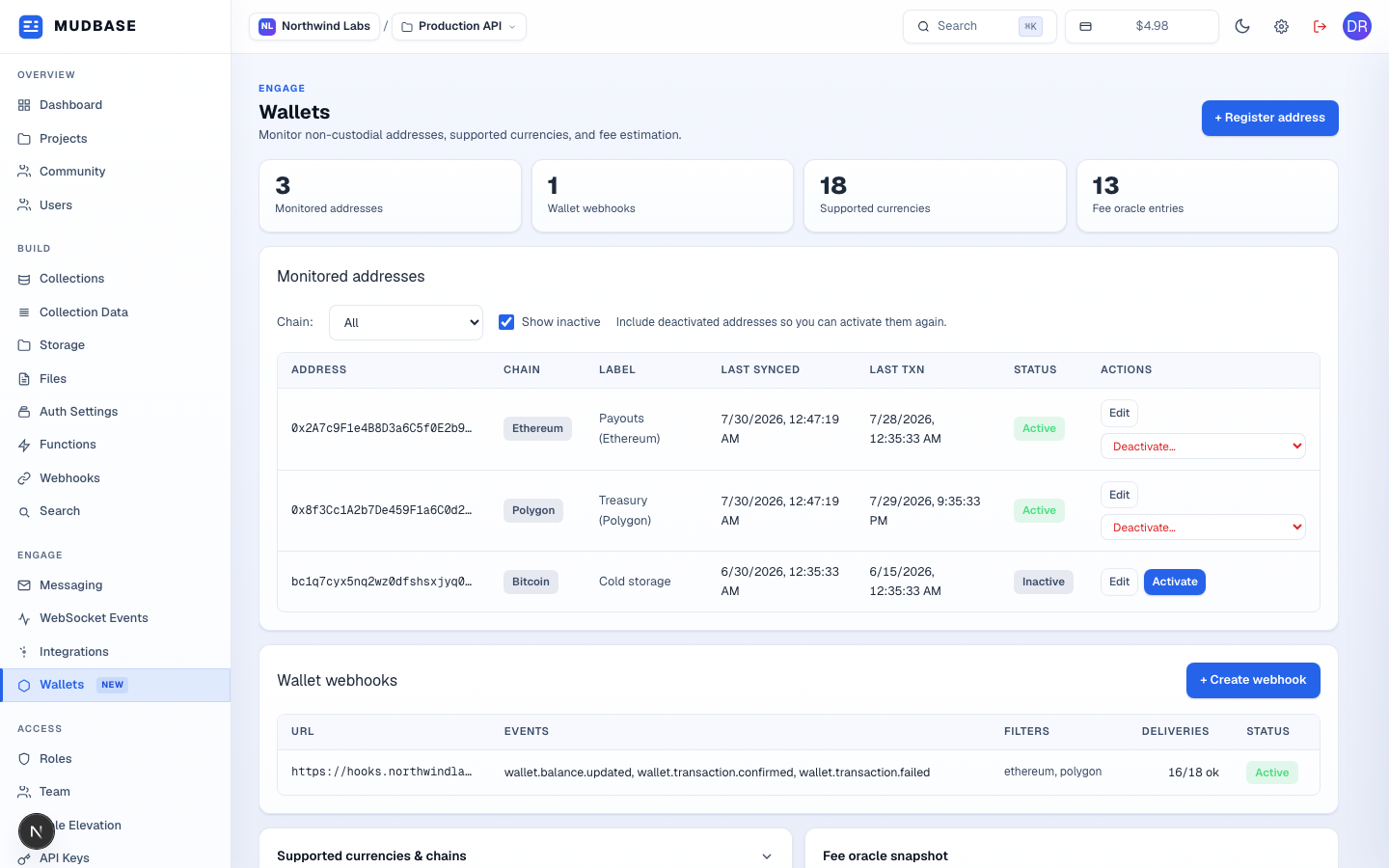
- Opens a form for a public address, chain, optional derivation path, and label. Registration is a client-side-only operation; no keys are ever sent or stored.
- Counts across this project: registered addresses, wallet webhooks, chains/currencies Mudbase supports, and fee-oracle entries currently cached.
- Every registered address with its chain, label, last sync/transaction time, and status. Deactivate offers a soft delete (stop monitoring, keep the record) or a permanent delete; an inactive row shows Activate instead.
Wallet webhooks, currencies, fees
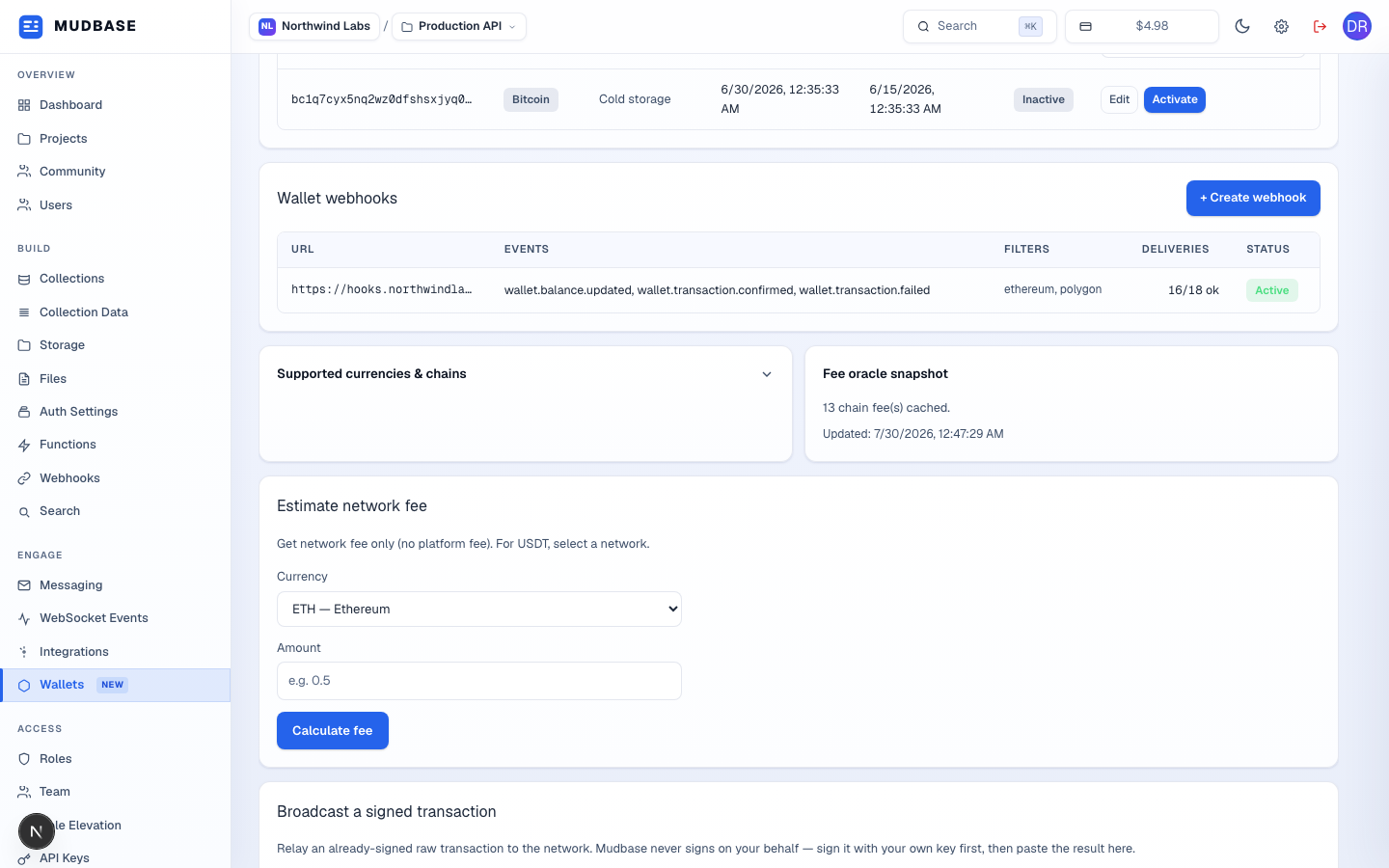
- Webhooks scoped to wallet events (balance updates, transaction confirmed/failed/ detected/broadcast), separate from the project's general-purpose Webhooks page. Click a row to open its full edit/test/delivery-log page.
- Opens a form for URL, one or more events, an optional HMAC secret, and optional address/chain filters.
- A collapsible list of every chain and currency Mudbase supports for wallet monitoring (18 entries as of this build); expand to browse.
- How many chain fee entries are currently cached and when they were last refreshed. This populates from real network traffic, not from anything you configure.
Estimate fee, broadcast transaction
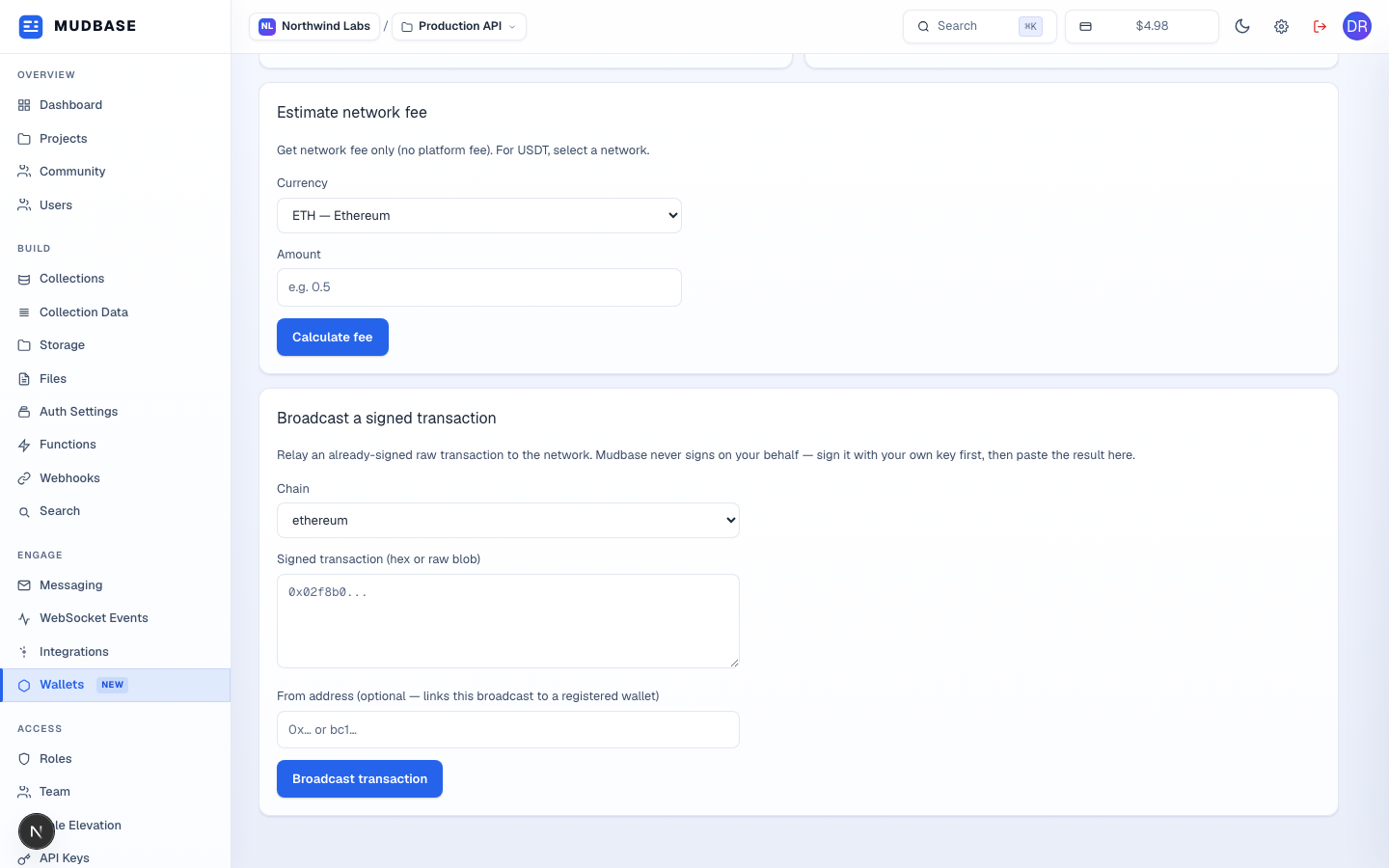
- Network-fee-only estimate (no Mudbase platform fee added) for a currency and amount; USDT additionally requires picking a network since it settles on several.
- Relays an already-signed raw transaction to the network: paste the hex or raw blob from your own signing step. An optional From address links the broadcast to a registered wallet for tracking; it's never used to sign anything.
Note
Block-scanner metrics behind wallet monitoring are in-memory only (
services/wallet/scannerMetrics.js) and need a live, continuously-running chain-scanner process; they reset on every backend restart and can't be seeded into a database. Everything shown on this page (addresses, webhooks, currencies, and the fee oracle) is otherwise real, persisted data.